

Belt conveyor built part by part in Autodesk Inventor
Rails, legs, rollers, belt and motor built and assembled in Inventor from chat requests; a clash check moved the motor 46 mm.

The video plays from YouTube’s privacy-enhanced player only after you click it.
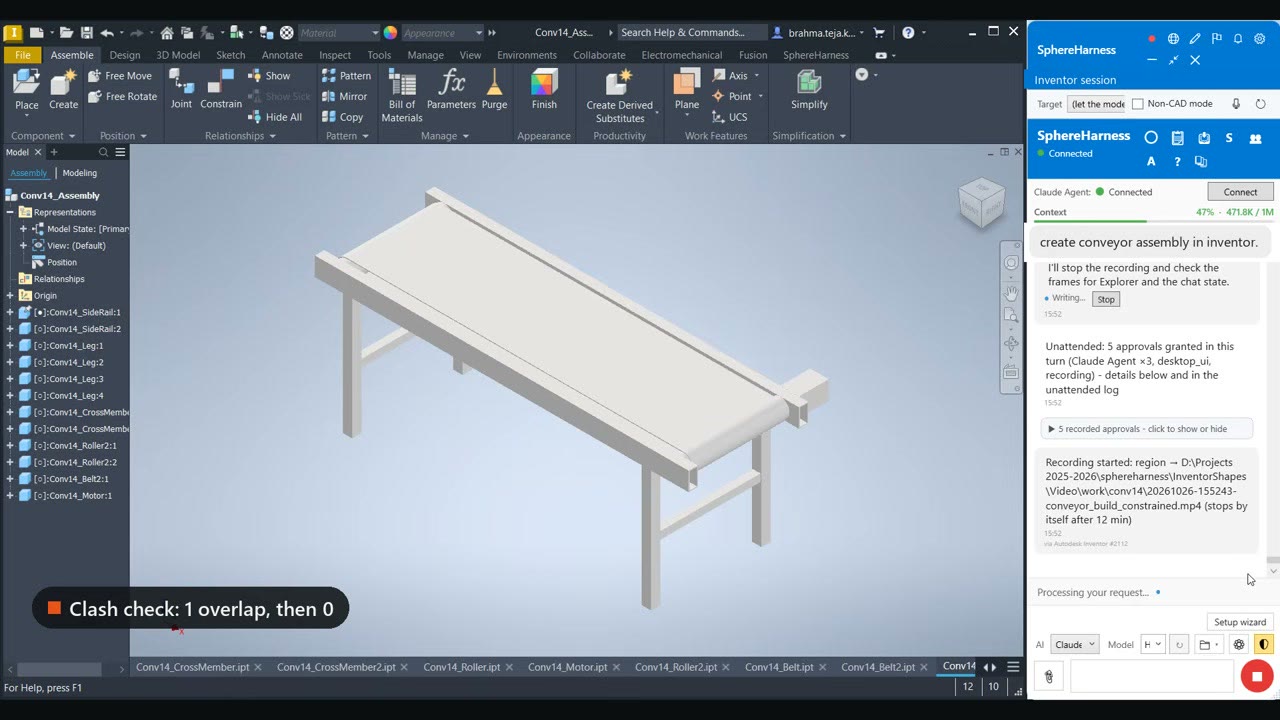
SphereHarness built a belt conveyor in Autodesk Inventor one part at a time and assembled it: side rails, support legs, cross members, rollers, a belt and a drive motor. A clash check found the motor overlapping the rail flange, the agent moved it 46 mm, and the second check found no overlaps.
What was asked
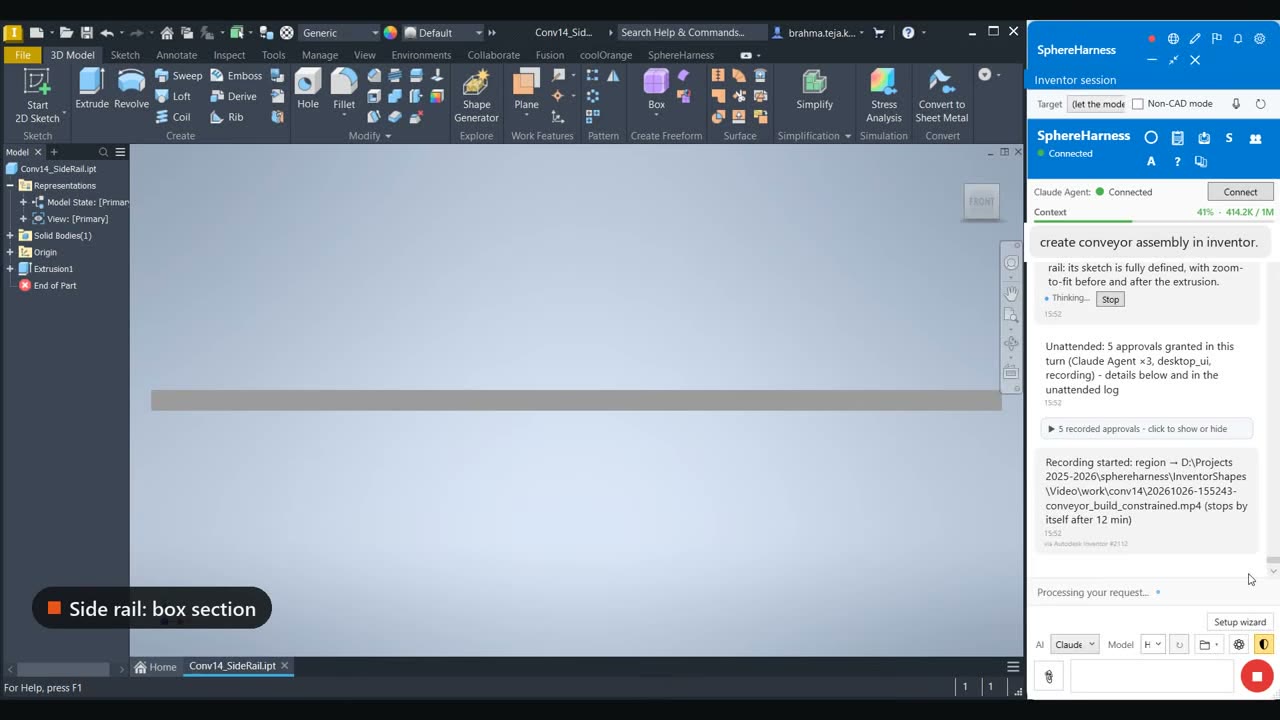
The chat in the first frames shows the request: "create conveyor assembly in inventor". From there the agent worked part by part, and each part was created from a plain-English description in the chat.
What the agent did
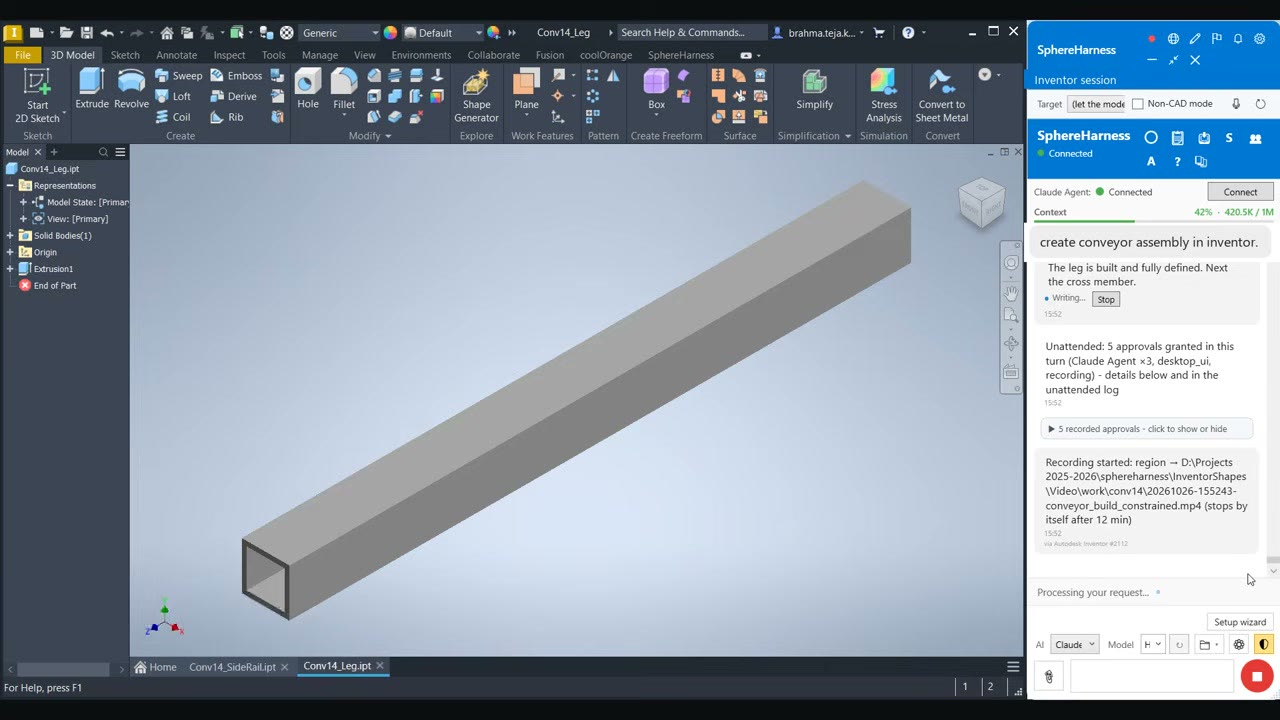
The side rail is a 50 x 100 mm box section with a 5 mm wall, extruded 2,000 mm. The support leg is a 50 mm square tube with a 5 mm wall, extruded 650 mm, and the cross member is a 40 mm square tube, 540 mm long, that ties the legs together.
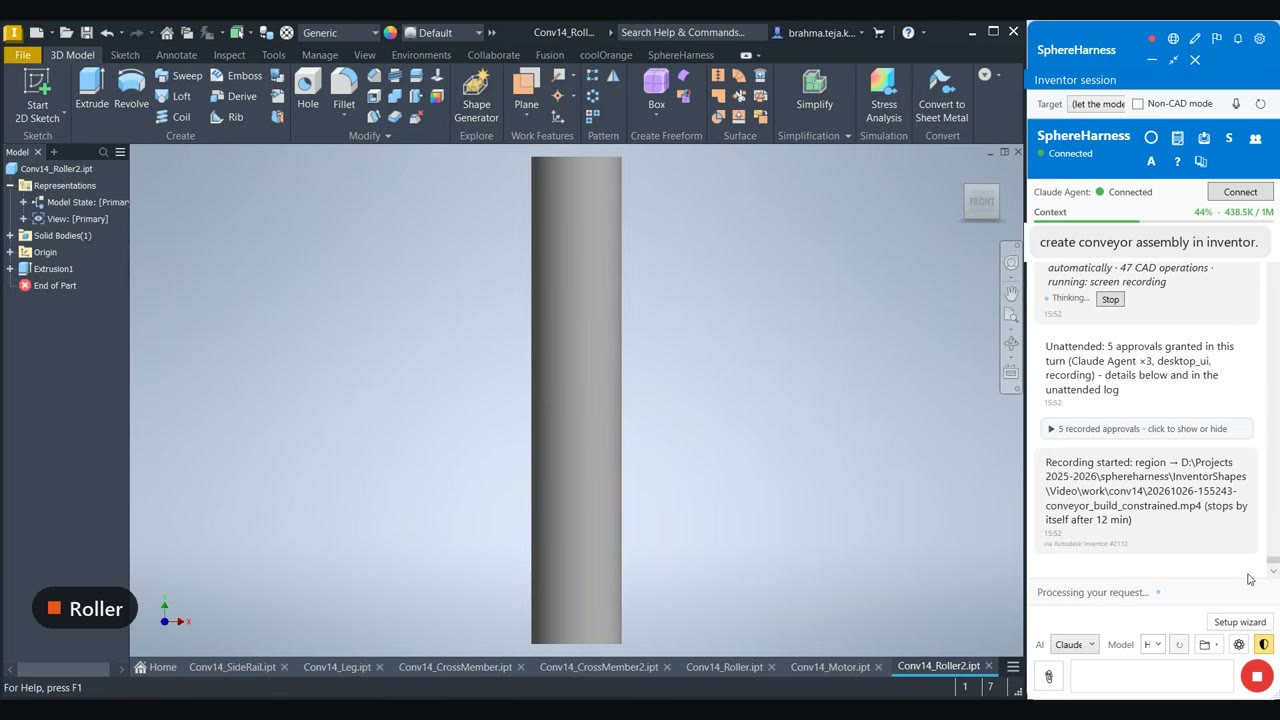
The drive motor is a 100 x 160 x 100 mm block. The roller is a 100 mm diameter drum, 540 mm long, extruded symmetric about its sketch plane. The belt is a closed loop around two pulleys 1,800 mm apart and 4 mm thick.
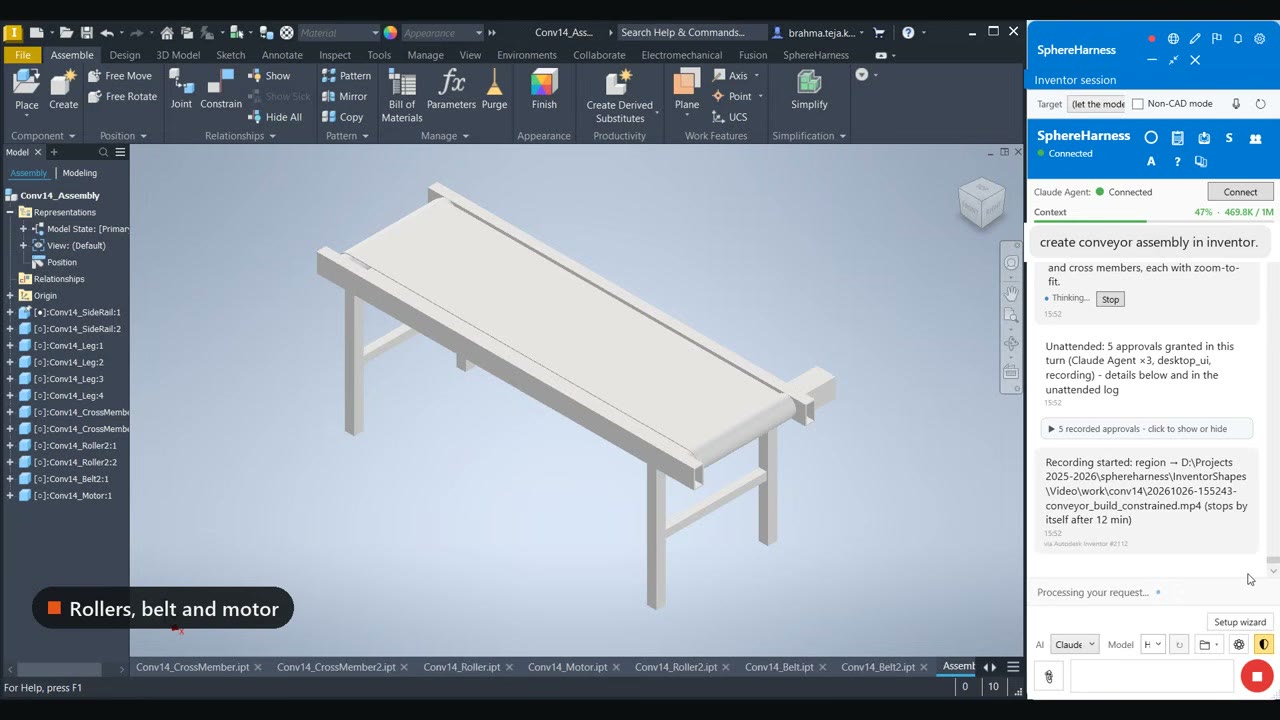
For the assembly the agent created a new assembly and placed the two side rails, one on each side. Four legs and two cross members form the support frame, two rollers go between the rails, the belt wraps around them and the motor goes on the head end.
What we measured
The clash check is the measured result. It reported one overlap, the motor against the rail flange. The agent moved the motor out by 46 mm, and the second check found no overlaps.
What did not work
The motor had been placed overlapping the rail flange. The clash check caught it, one move of 46 mm fixed it, and a second check confirmed the result.
Try it yourself
SphereHarness for Autodesk Inventor is described at /inventor, and /help/getting-started walks through the first install and the first request.