

Parametric bicycle in Inventor: four sizes, drawings, stress study
A 26-inch bicycle driven by three parameters becomes a Kids, Youth, Adult and XL family with A3 drawings, a Nastran study and Vault check-in.

The video plays from YouTube’s privacy-enhanced player only after you click it.
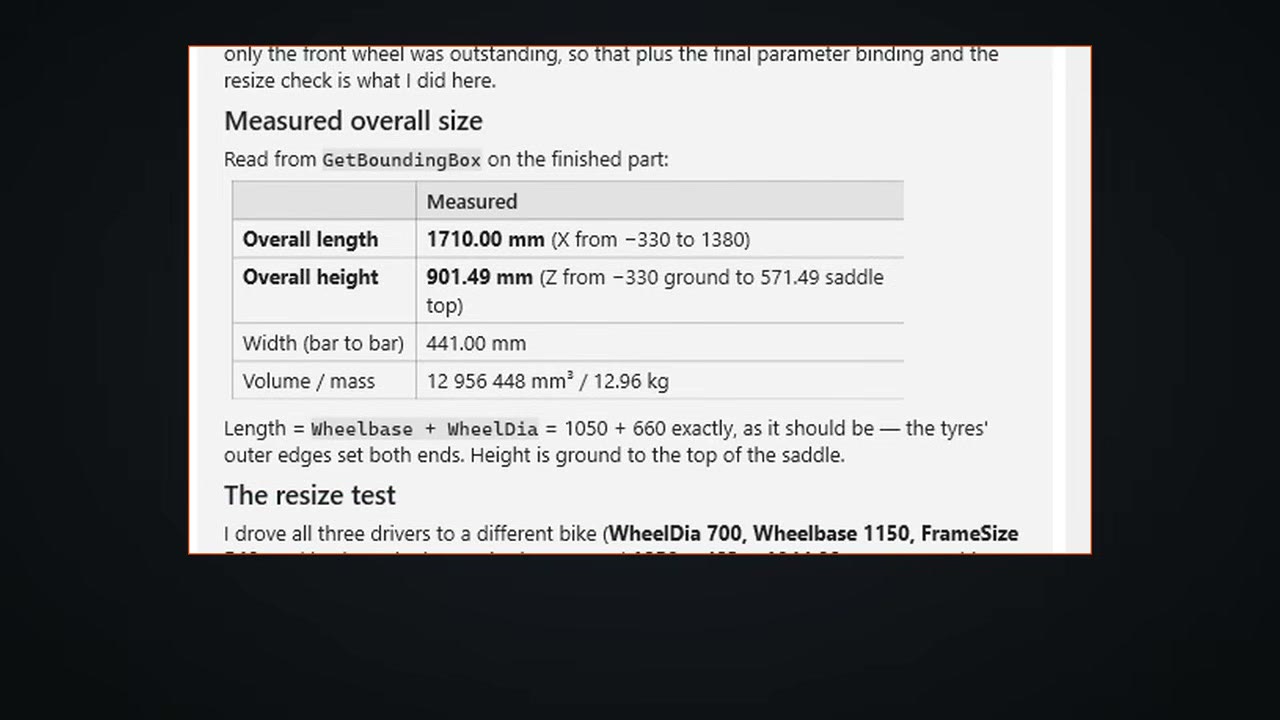
SphereHarness built a parametric 26-inch bicycle in Autodesk Inventor, then turned it into a size family of Kids, Youth, Adult and XL, each with its own A3 drawing. The built bicycle measured 1,710.00 mm long and 901.49 mm high, and the Adult mass of 42.254 kg matches the 42.25 kg regression figure the agent kept in its skill.
What was asked
One request in plain words asked for a parametric 26-inch bicycle. Three user parameters drive everything: wheel diameter 660 mm, wheelbase 1,050 mm and frame size 450 mm. The agent drew one skeleton sketch for the frame, swept the tubes along it, then added the fork, head tube, saddle, handlebar and both wheels.
What the agent did
Detail steps followed: a saddle shaped from a downloaded reference picture, a curved riser bar with a stem and grips, a tyre tread, and colours: red frame, black tyres, orange rims, silver bar and seat post. Every new feature stayed driven by the same three parameters.
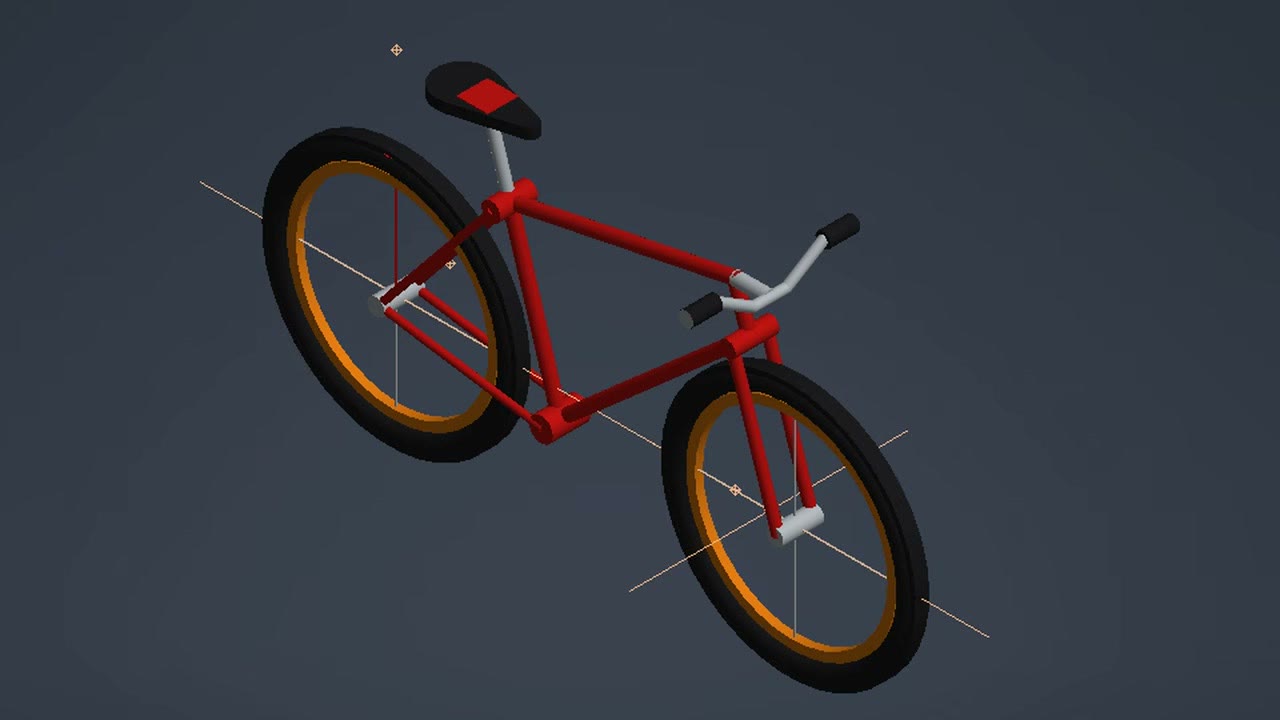
To test that it is parametric, the agent set a kids bike: a 20-inch wheel, an 850 mm wheelbase and a 300 mm frame. The frame, wheels, fork, bar and saddle followed, and setting the 26-inch size back returned the measurements to the original values.
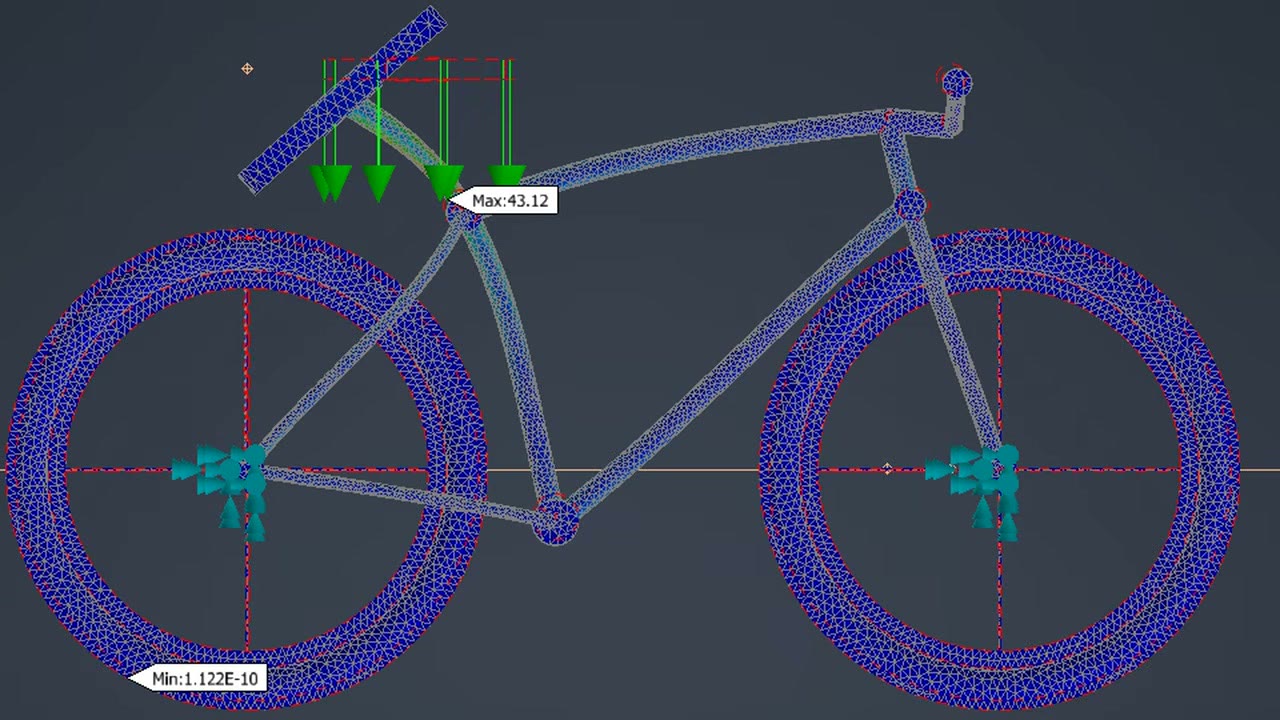
The strength question was asked in plain words: aluminium 6061, both axles fixed and a load pushing down on the saddle. Inventor Nastran meshed and solved the frame, and the agent started at 1,000 N and raised the load until the safety factor reached 1.5.
What we measured
The verified study result was 3,800 N on the saddle, a maximum stress of 184 MPa, 6.2 mm of deflection and a safety factor of 1.5.
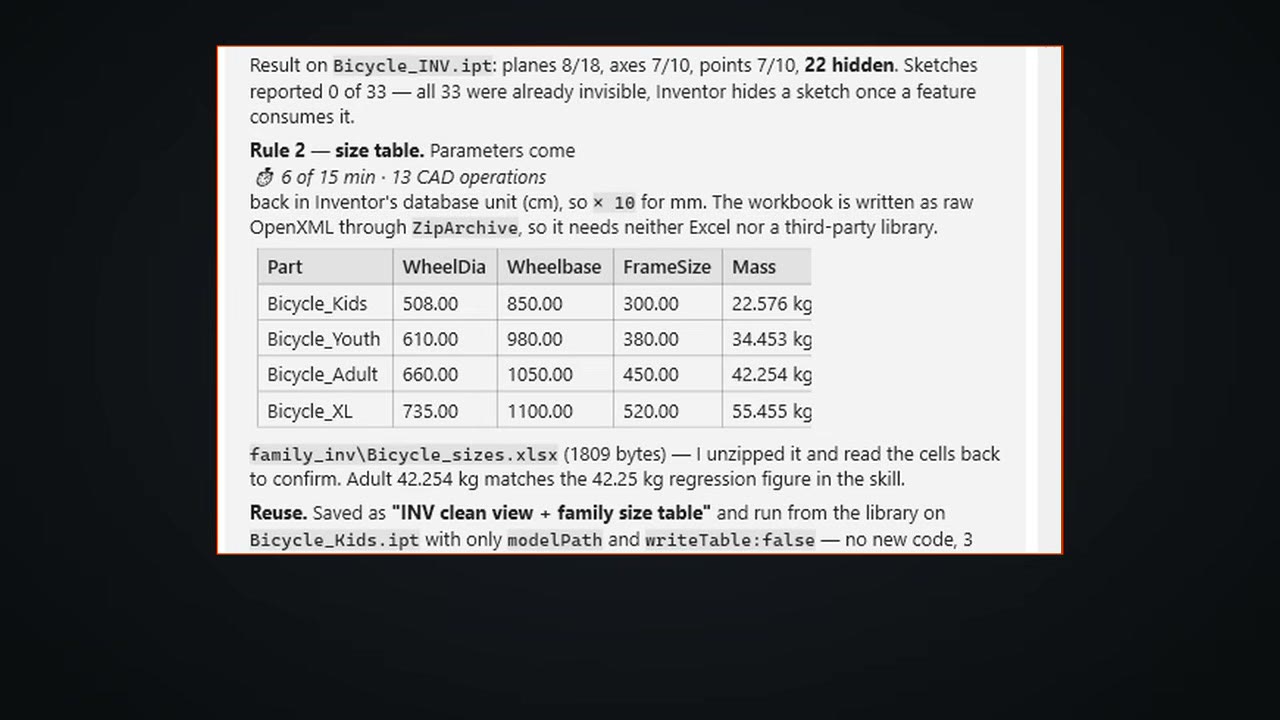
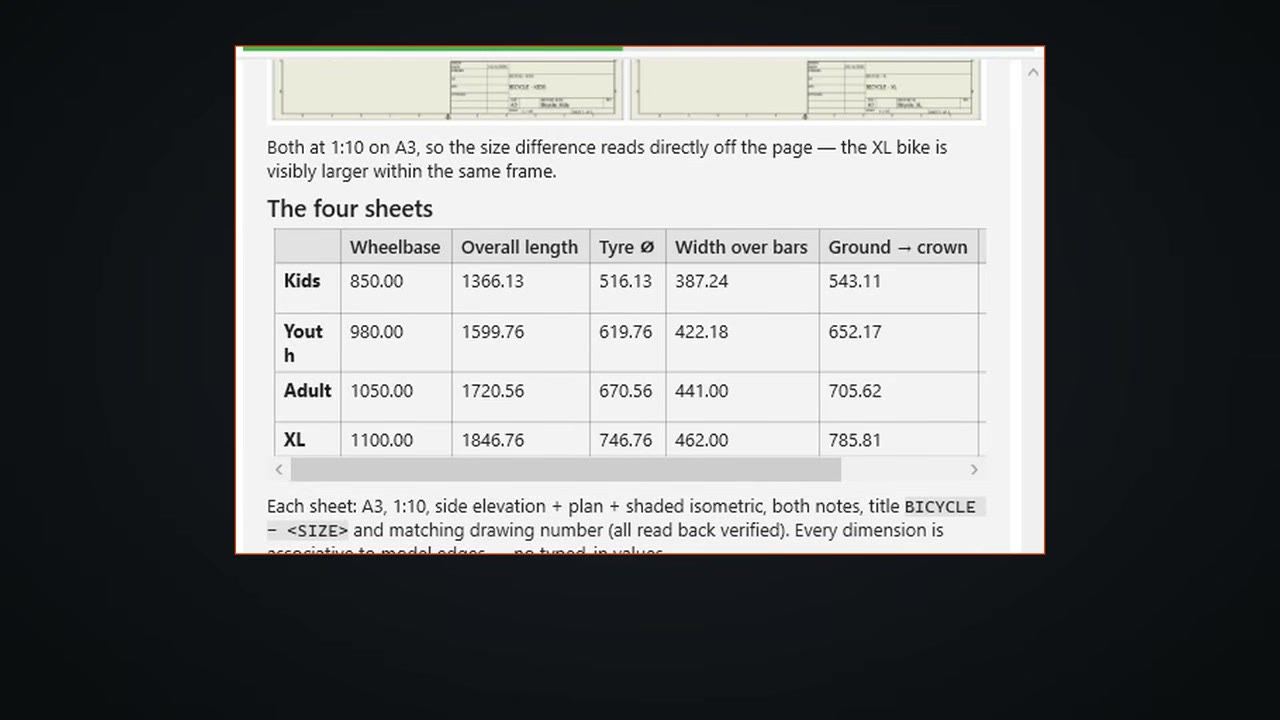
The size family keeps only the three drivers in a template and adds four instances. Each size is its own Inventor file, and the agent reopened every saved file and read its parameters back. The Adult mass is 42.254 kg, Kids 22.576 kg, Youth 34.453 kg and XL 55.455 kg.
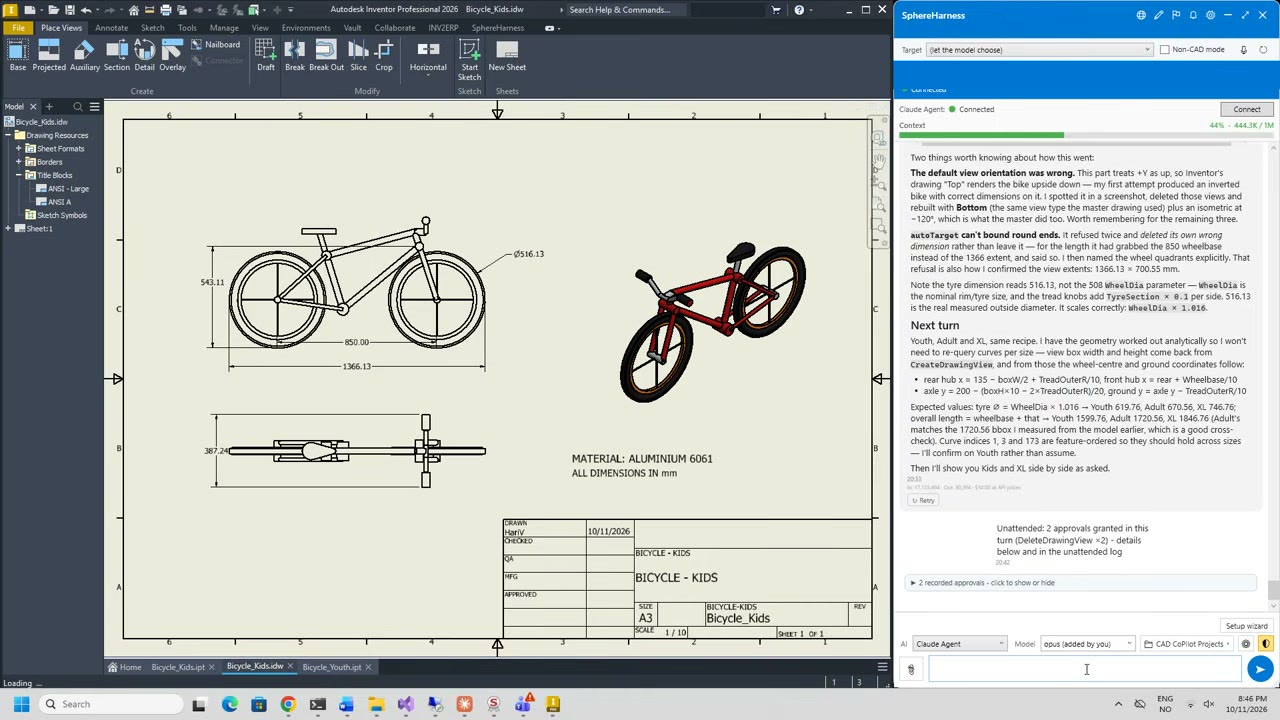
Each size also has a drawing built from its own part: A3, 1:10, side elevation, plan and shaded isometric, with every dimension associative to model edges. The overall lengths read from 1366.13 mm for Kids to 1846.76 mm for XL.
What did not work
The default drawing view orientation came out wrong for this part. It treats Z as up, so the drawing's Top view rendered the bicycle upside down. The agent fixed it by using the Bottom view for the plan, and the lessons saved with the skill note the same rule.
The files were then checked into Autodesk Vault: 10 files, all at version 1, none checked out.
Try it yourself
SphereHarness for Autodesk Inventor is described at /inventor, and /help/getting-started walks through the first install and the first request.