

Mars rover built in Siemens NX from one saved skill
One chat request runs a saved skill: 21 parts and a 36-component Mars rover assembly in Siemens NX, checked against stored volumes with 0 overlaps in 630 pairs.
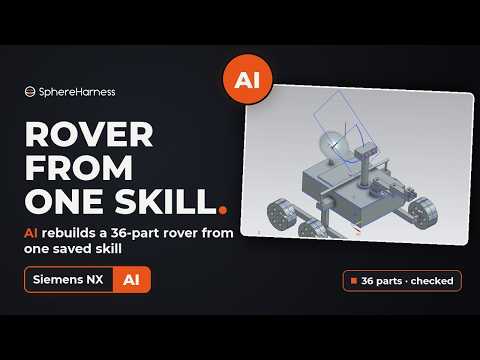
The video plays from YouTube’s privacy-enhanced player only after you click it.
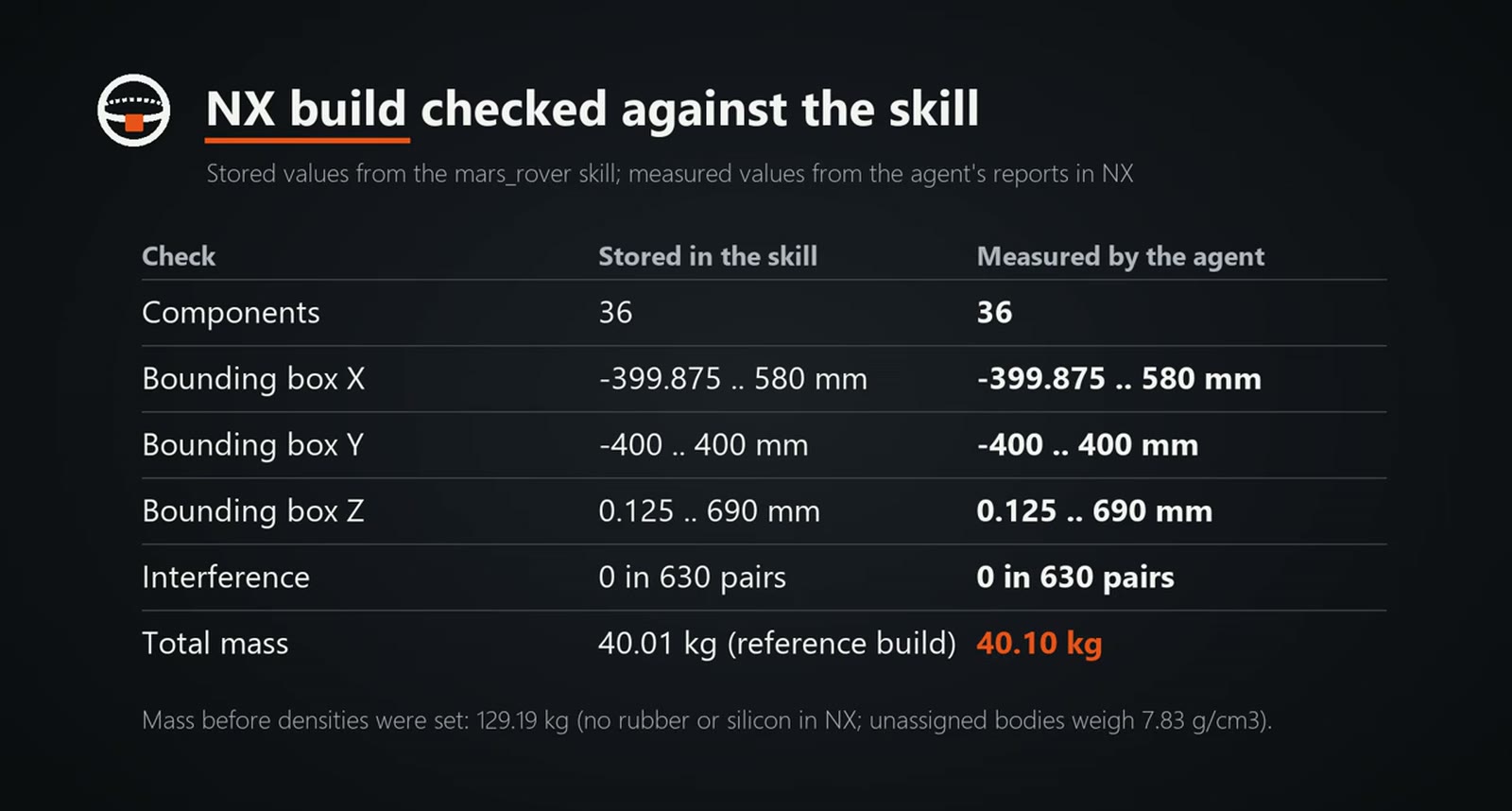
A saved SphereHarness skill called mars_rover holds everything needed for a six-wheel Mars rover, and one chat request made Siemens NX build all 21 parts and the 36-component assembly. The final check found 0 overlaps in 630 pairs and a mass of 40.10 kg.
What the skill holds
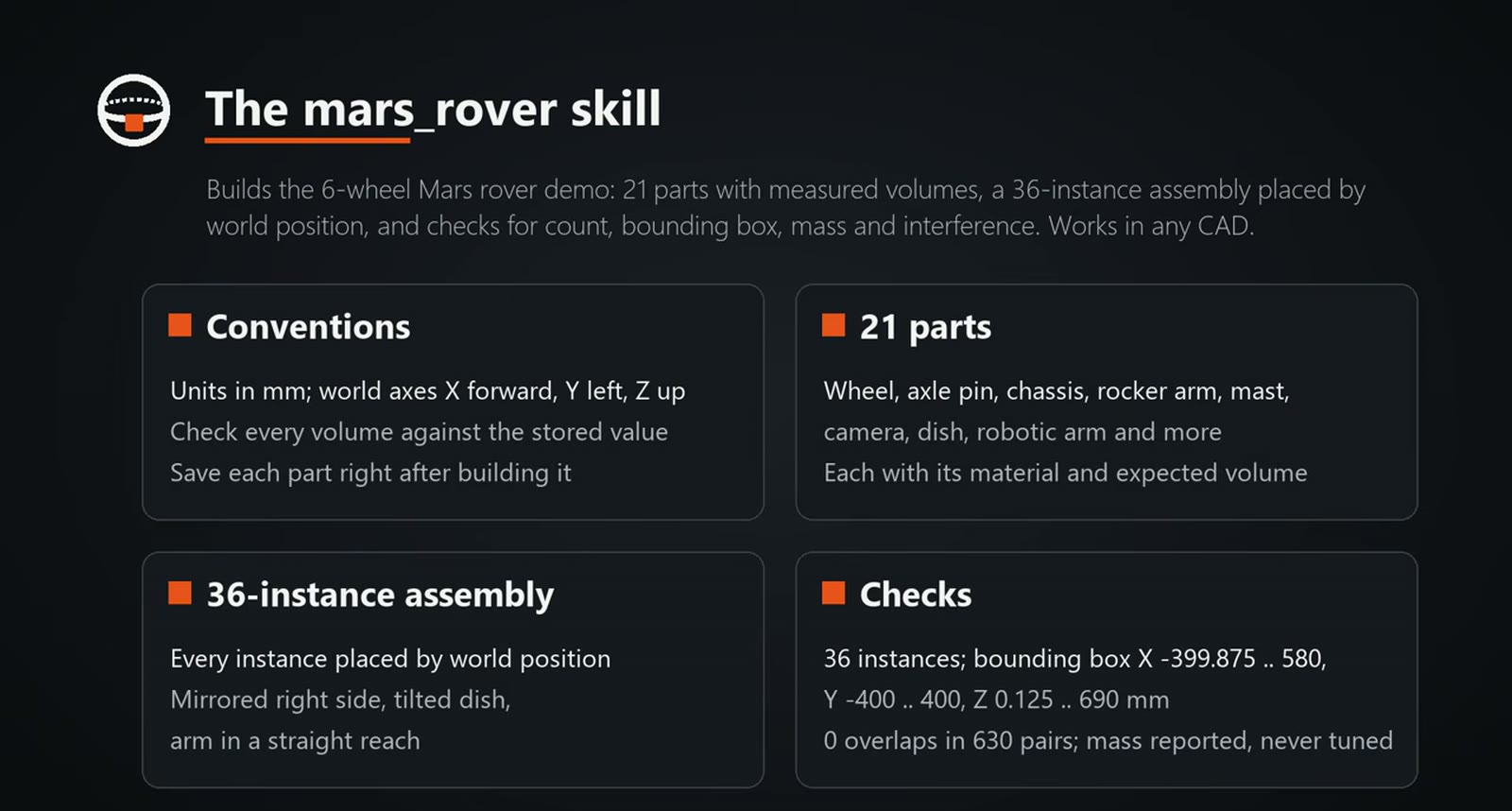
The skill was created earlier and saved. It stores the conventions, the 21 parts with their materials and volumes in mm3 (the wheel is rubber at 2,101,249.5 mm3, for example), the 36 assembly placements, and the checks to run: instance count, bounding box, interference and mass.
What was asked
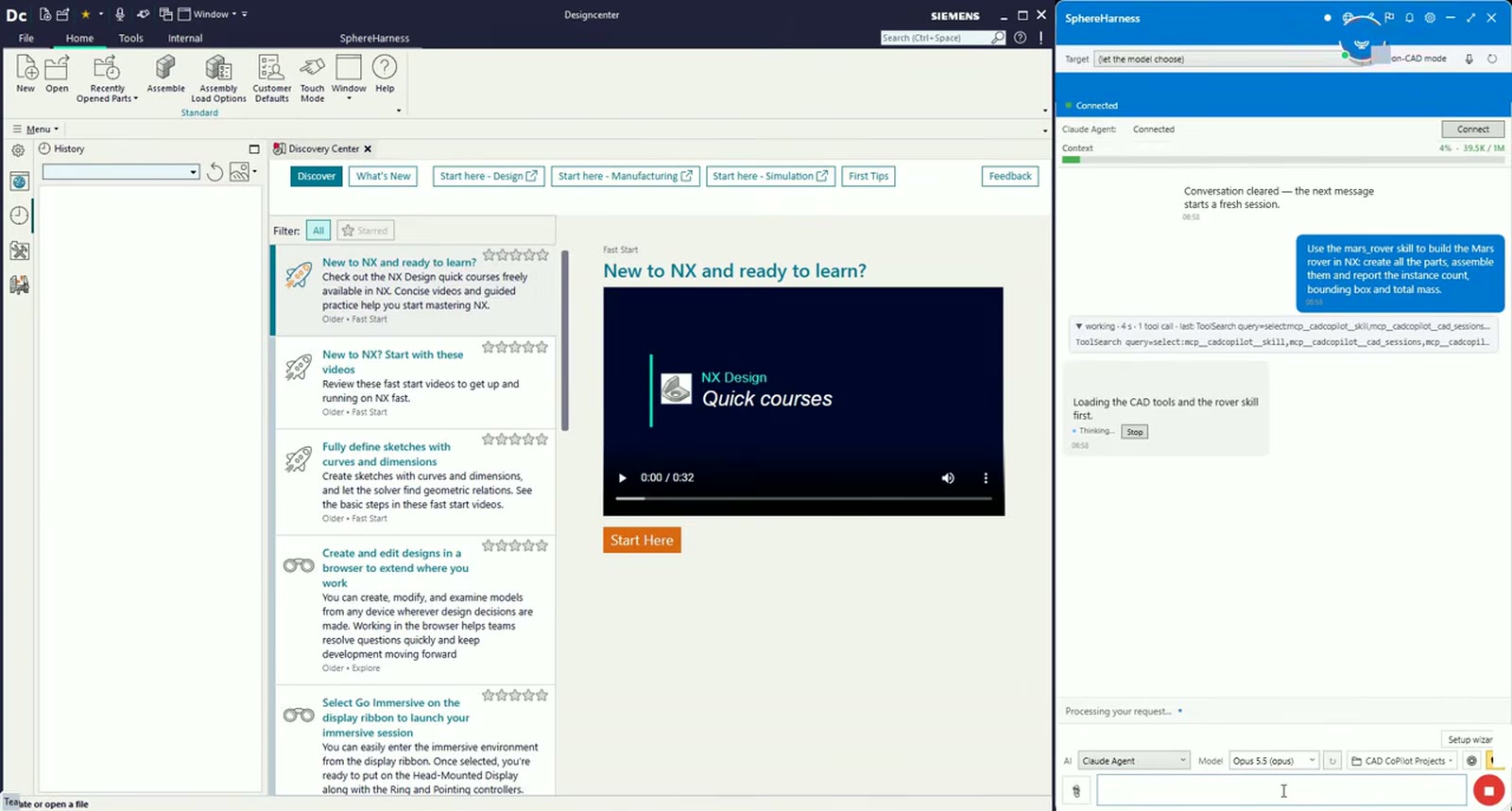
NX is open and empty with a fresh chat. The request reads: "Use the mars_rover skill to build the Mars rover in NX: create all the parts, assemble them and report the instance count, bounding box and total mass."
What the agent did
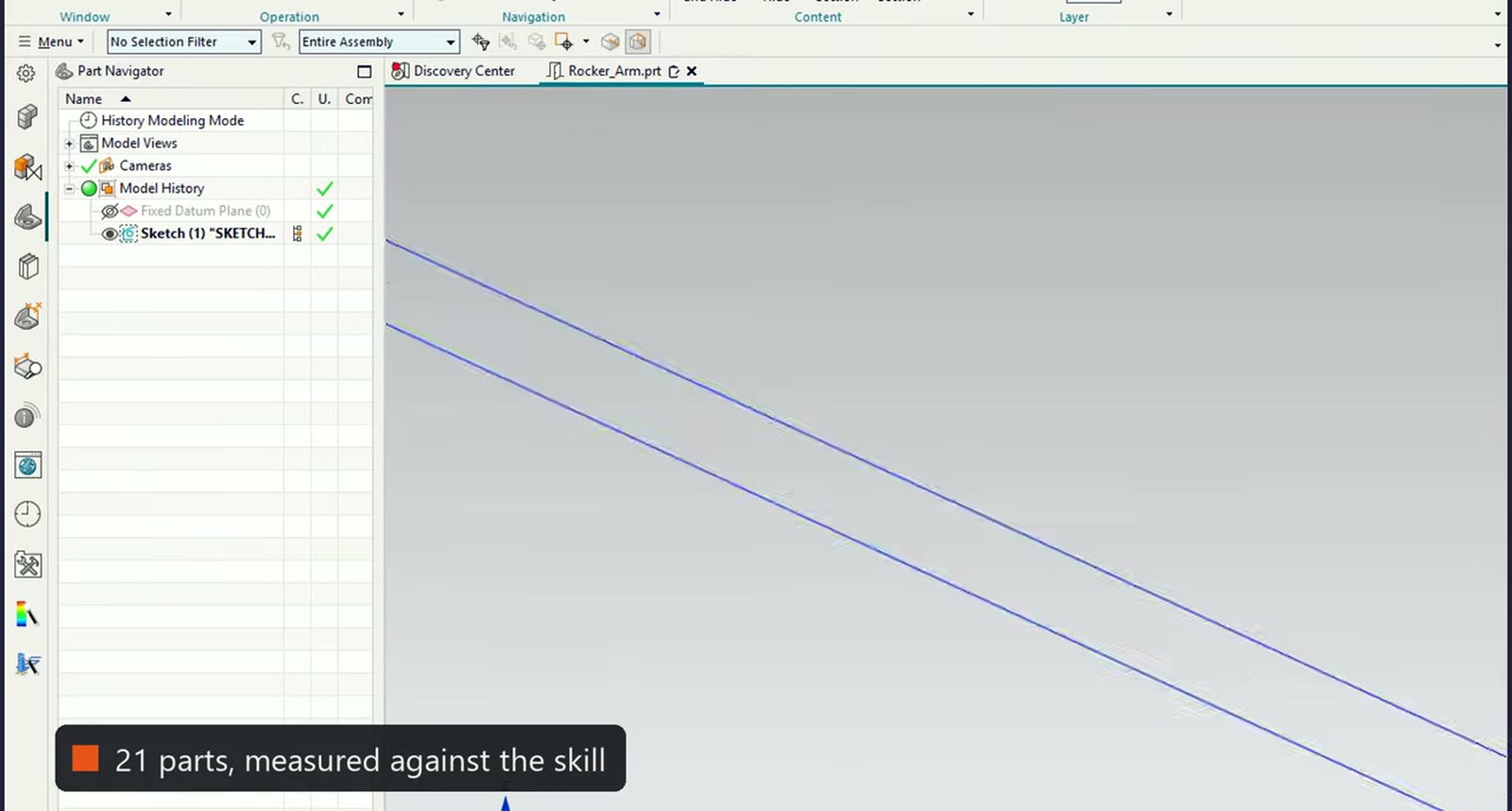
The agent loads the skill and probes NX with a simple box first. It then builds the parts one after another: rocker arm and brackets, axle pins, arm, mast and camera, the wheel with patterned grooves, and the hollow dish. Each volume is measured against the value stored in the skill. This stretch is sped up about 12 times in the video.
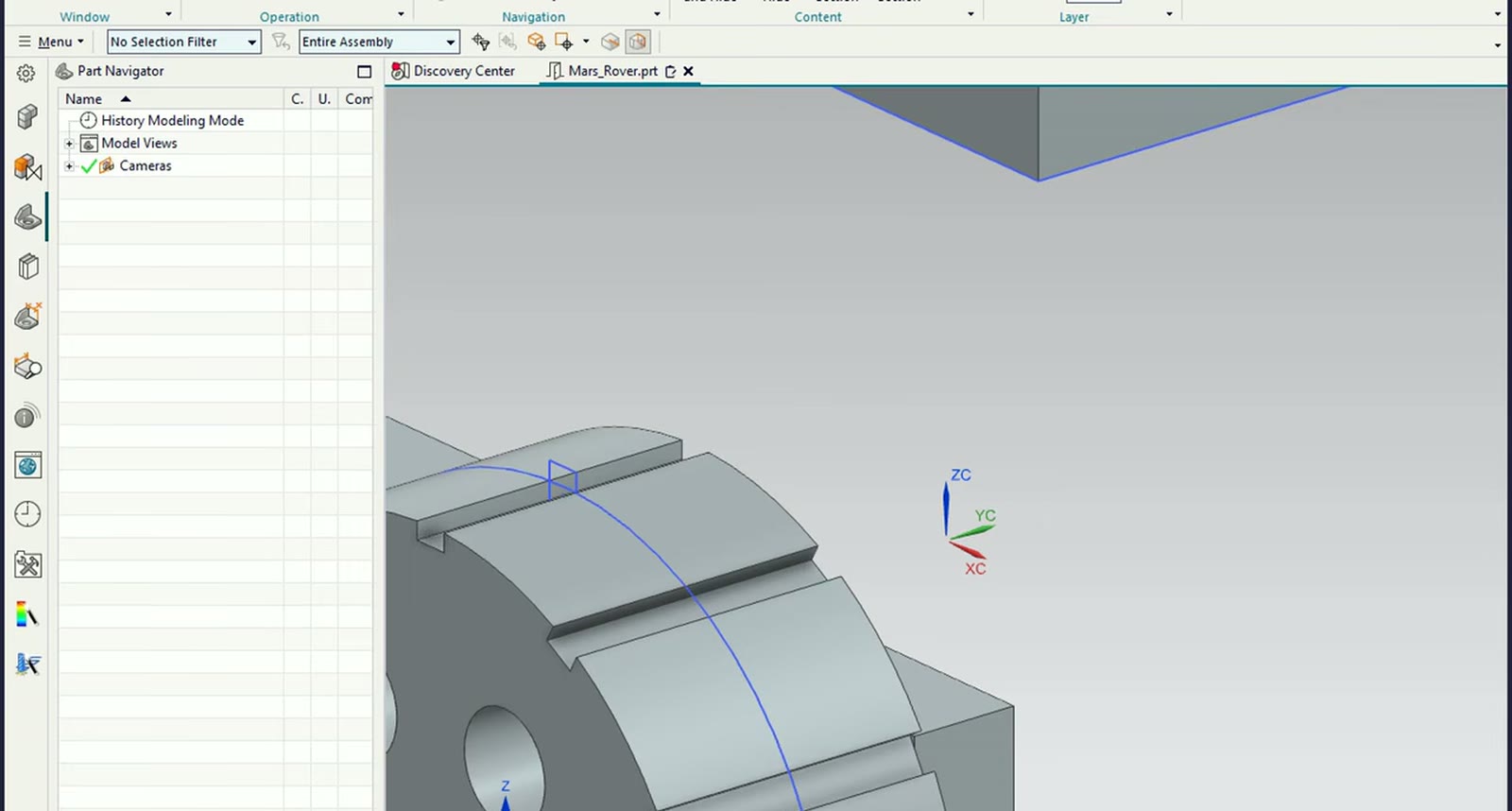
The assembly follows with 36 placements, the mirrored right side, the tilted dish and the arm. Instance count, bounding box and interference match the skill.
What did not match, and what we fixed
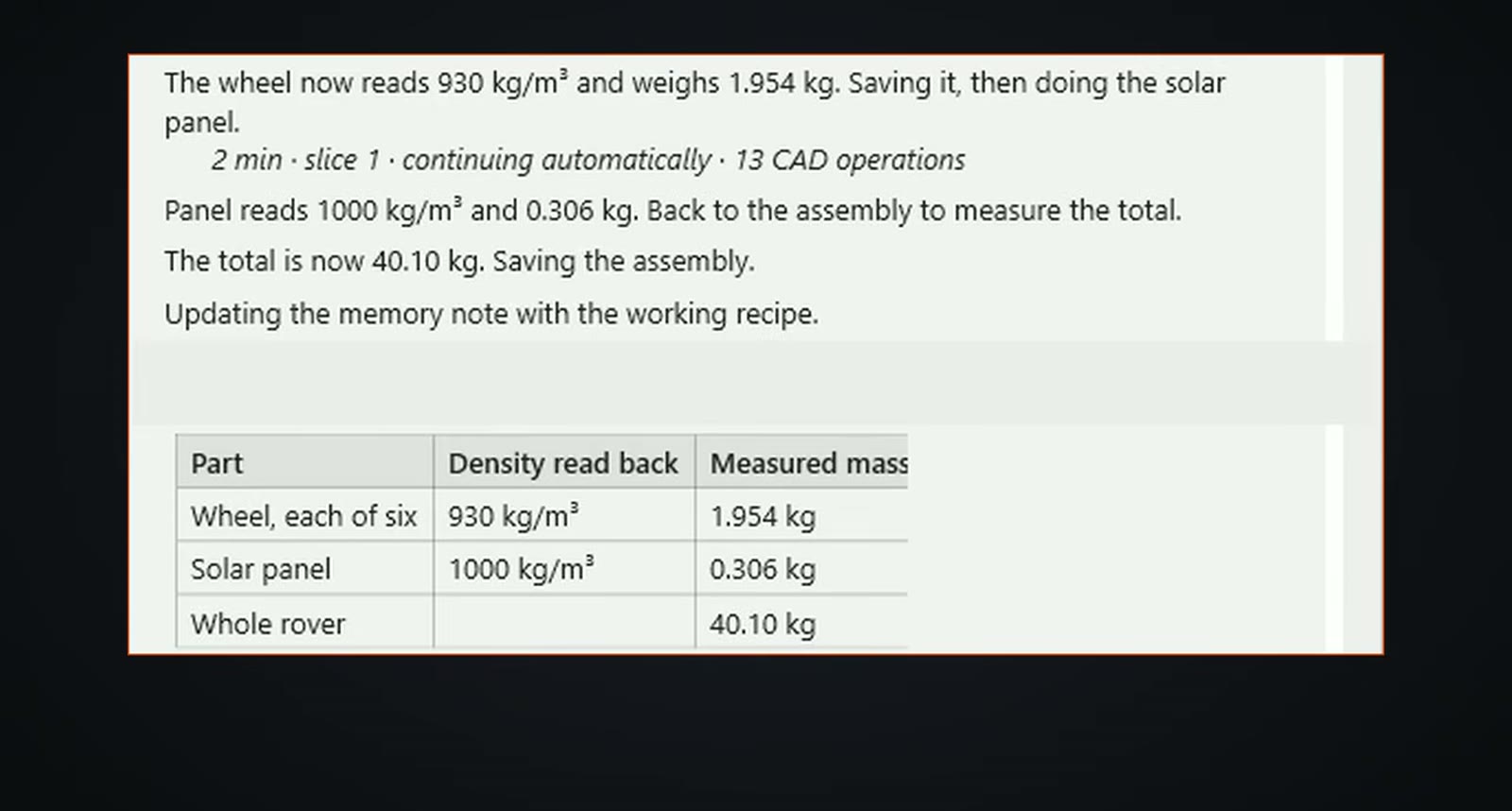
The mass did not match at first: the agent read 129 kg, because NX had no rubber or silicone material loaded and the agent would not invent one without asking. The person gave the go-ahead with rubber at 0.93 g/cm3 and a density for the panel. NX has no operation for creating a material, so the agent wrote a small material library, assigned it, read the density back and measured again.
What we measured
The wheel reads 930 kg/m3 and weighs 1.954 kg; the panel reads 1000 kg/m3 and 0.306 kg; the whole rover is 40.10 kg. Against the skill: 36 components, an identical bounding box, no overlaps in 630 pairs, and a mass within 90 g of the stored value.
The video was run by the SphereHarness desktop agent with Claude Code (Opus).
Try it yourself
The NX page is at /nx, and the first-run steps are in /help/getting-started.